Build In Public Case Study
What Did A Bad Market Open Teach Us About Building A Trading Bot?
The short answer: the system did not need more random filters. It needed to separate discovery, quality, readiness, and execution so a great early setup did not become a late chase.
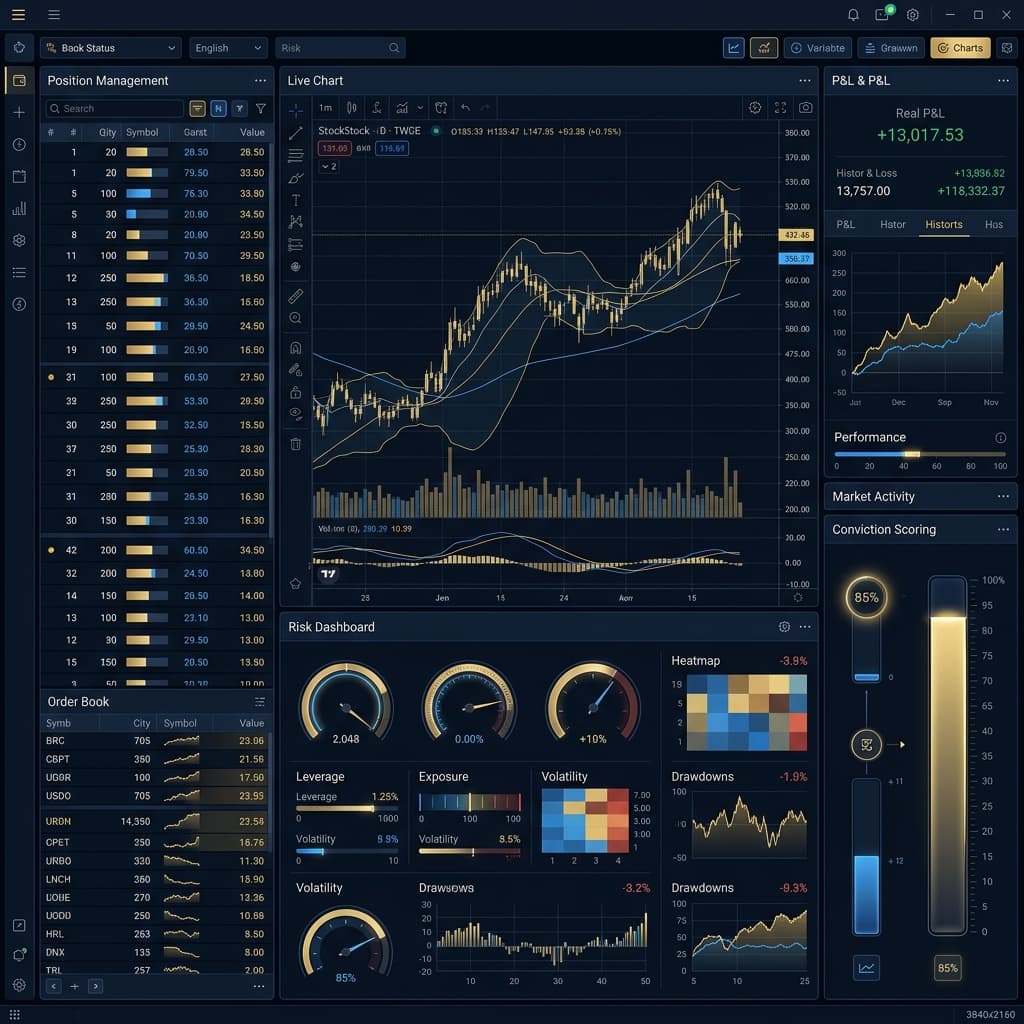
Some trading days teach the lesson politely. This was not one of them.
The morning started with a technical blocker, turned into a live execution argument, and ended with a cleaner model for how QuantRead should decide whether a ticker is merely interesting, almost ready, or actually ready to trade.
That distinction sounds small until the market opens. Then five minutes becomes expensive, a good setup becomes a bad fill, and a dashboard full of grades can still leave the operator asking the only question that matters: why did the system not act when the opportunity was still clean?
Plain-English Answer
The system was finding the right kind of names, but it was not showing readiness early enough or cleanly enough. It was too easy to see a scanner grade and think that meant execution permission. The fix was to make the system recognize the pre-launch state before the breakout becomes obvious.
The Story Of The Day
Auth had to be fixed before the market mattered.
The day started with Schwab authentication, not chart analysis. The important discovery was that the login path crossed two systems: the trading engine that starts the OAuth flow, and the QuantRead website callback that receives it. When those two sides disagree about login state, the trading bot can be healthy and still blocked from account access.
The open exposed speed as a trading variable.
At the open, being correct five minutes late is still a bad execution process. A setup can be real at 6:30 PT and much less attractive by 6:35 PT. That forced the system to stop treating confirmation as a slow review step and start treating readiness as something that has to exist before the trigger fires.
Scanner grade and execution grade were not the same thing.
The scanner was good at finding names worth attention. The structural ticker grade was good at describing chart quality. But the operator experience blurred those two ideas together, which led to overcorrection: gates, filters, and thresholds were added to make one display feel like the other. That was the wrong lesson.
Dirty names taught us that attention can imitate quality.
High-attention, meme-style tickers can look active while still being structurally hostile. The lesson was not simply to dislike one ticker. The deeper lesson was that some setups are designed by the tape itself to create urgency, fake confirmation, and punish late entries.
The breakthrough was the launch lane.
The strongest idea that came out of the day was that winning candidates should not be discovered after they are already extended. They should be staged before the open, sitting in an early opportunity band, moving in the right direction, and waiting for proof.
The Grade Confusion Was Real
One of the biggest discoveries was not a math problem. It was a language problem.
A scanner grade can mean, "this ticker deserves attention." An execution grade has to mean, "this ticker is structurally ready to risk money on right now." Those are not the same sentence.
When those two meanings get blended together, the system gets overcorrected. You start adding gates to make the visual grade feel right, but the original scanner may already be doing its job. The better fix is not to punish the scanner. The better fix is to label the layers honestly.
Discovery is not readiness. Readiness is not execution. Execution is not a chart opinion.
The .146 To .236 Launch Lane
The best idea of the day came from working backward from the winners.
The goal was not to ask which row of a watchlist won. Ranking position changes from deploy to deploy, and it is too arbitrary to be the foundation of a trading rule. The better question was: what did the winners have in common before they were obvious?
The answer was not simply "they were near a level." Static location is not enough. A stock can sit under a proof level because it is resting before launch, or because it is failing and rolling over. The system has to understand motion.
That led to the launch-lane model:
- Premarket or open bias is already pointing in the trade direction.
- Directional volume is supporting the move instead of fighting it.
- The name is in the early launch band, not already stretched.
- Price is moving toward proof, not resting, fading, or drifting away.
- There is enough room to the next meaningful channel for the trade to matter.
- The setup is near the trigger before confirmation, not dollars above it after the move is obvious.
- The dashboard can label the state clearly: armed, ready, gated, blocked, or missed.
What Changed In The System
Discovery
The scanner can still surface interesting tickers, but interesting is no longer treated as trade-ready.
Readiness
A candidate can now be labeled ARMED EARLY when it is staged in the .146 to .236 lane and moving toward proof before the trigger is fully confirmed.
Execution
LAUNCH READY is reserved for candidates where confirmation has arrived and the system can act without pretending a late chase is still clean.
Rejection
Static, fading, below-lane, and extended candidates are treated differently. Location alone is not enough. Direction matters.
In practical terms, the system now has language for the state that matters before the open: armed early, waiting for proof. That is different from ready. It is also different from blocked. It is the missing middle state that lets the operator see the setup forming before price has already moved too far.
Where Traders Get This Wrong
This is not just a bot problem. Human traders do the same thing manually.
- They treat a scanner as an execution system.
- They treat movement as quality.
- They treat a good idea late as if it were still the same good idea.
- They confuse being near a level with actively launching from that level.
- They add filters after a loss without asking whether the filters target the actual failure.
- They chase proof after proof has already become price.
The dangerous part is that each mistake feels rational in the moment. A stock is moving. The scanner likes it. The chart looks alive. The candle is green. The trade feels close enough.
But close enough is exactly where bad entries live.
What QuantRead Is Designed To Do Now
QuantRead is being shaped around a stricter idea: find the winners earlier, show why they are becoming winners, and do not let a late chase masquerade as conviction.
That means the system needs to care about the common denominator of strong morning moves: premarket bias, directional volume, room to target, location in the channel, and whether price is actively moving from early opportunity toward proof.
It also means the dashboard has to communicate readiness plainly. A trader should be able to look at the screen before the open and understand the difference between:
- A ticker worth watching.
- A ticker armed in the early band.
- A ticker launch-ready after proof.
- A ticker already missed or too extended.
- A ticker that is active but structurally dirty.
What This Does Not Promise
This does not promise a 100% win rate. Any trading system that says that out loud should be asked to step away from the keyboard.
What it does promise is a cleaner standard. The system should stop rewarding late confirmation, stop confusing scanner interest with execution permission, and stop treating every loud ticker as a quality setup.
The goal is not to trade more. The goal is to be ready earlier for the few names where the evidence is lining up before the rest of the tape has finished announcing it.
Check The Setup Before You Chase The Move
Use QuantRead Ticker Grader as a quality-control layer before treating scanner noise like trade permission.
Open Ticker GraderEducational note: this article is for general trading education only. It is not financial advice, a performance claim, or a recommendation to buy or sell any security.