Build In Public System Notes
The DNA of a Winner
Over the last day, QuantRead changed from asking whether a ticker looked impressive to asking whether the underlying evidence matched the way morning winners actually form.
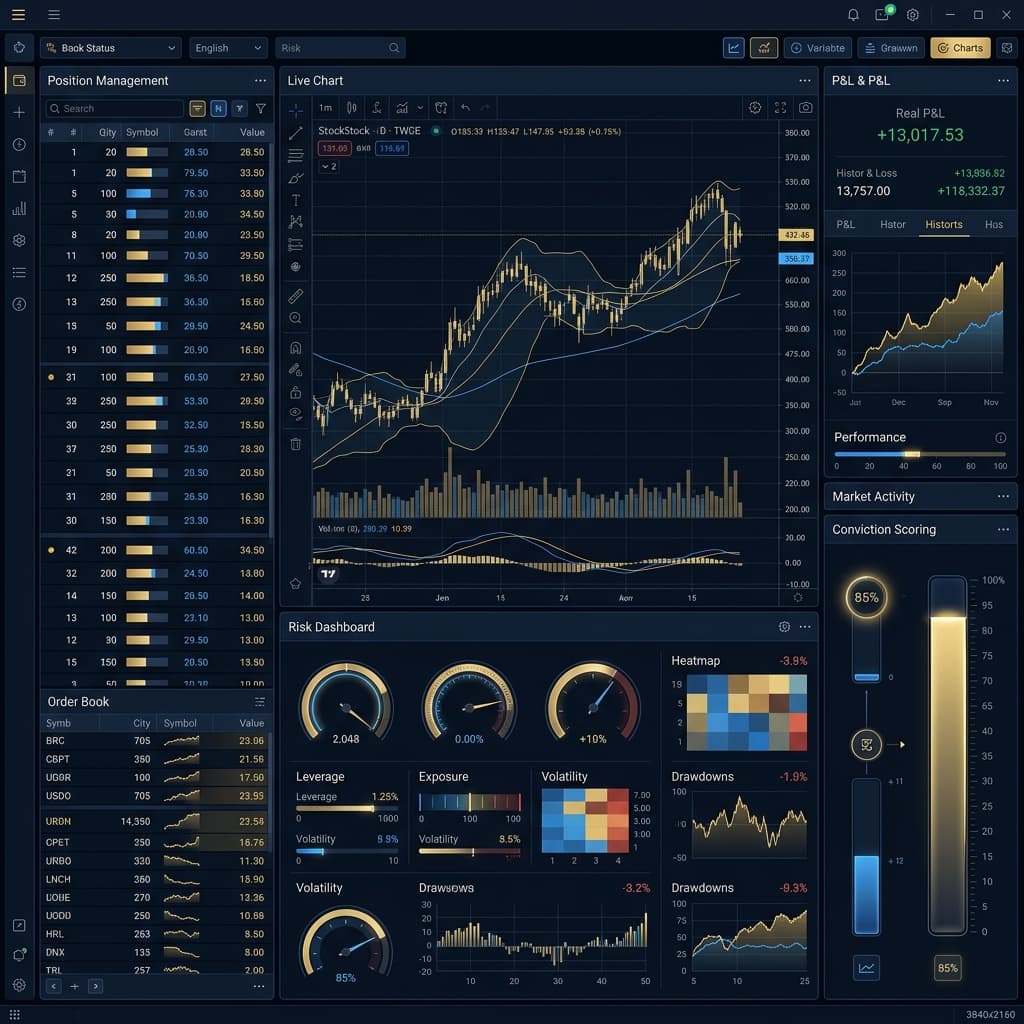
A winner usually leaves fingerprints before it becomes the chart everyone notices.
That was the real lesson. The system did not need another arbitrary score layered on top of another score. It needed to stop worshiping the visible grade and start reading the evidence underneath it.
A scanner can tell you something is active. A structural grade can tell you whether the chart has quality. But neither one, by itself, answers the question that matters at the open:
Is this stock becoming a winner right now, while the entry is still early enough to matter?
The Old Problem
The old model had too many ways to be technically smart and operationally late. It could find a strong name, grade it, block it, refresh it, rank it, and still leave the operator staring at the move after the clean entry had already passed.
That is how a good idea becomes a bad trade. The idea is not wrong. The timing is.
- A good scanner row could be mistaken for a good trade.
- A late entry could look convincing because the move had already proved itself.
- A ticker could be blocked by a composite grade even when the hidden winner factors were present.
- A fast morning move could be seen by the system, refreshed with live price, and still published in an order that no longer matched the newest data.
- The operator could see a hot name without seeing whether it was early, ready, missed, or structurally hostile.
The Core Change
QuantRead now treats visible grades as summaries, not permission slips. The execution question is answered by the underlying factors: location, direction, volume support, open bias, room to target, and whether price is actively moving from early opportunity toward proof.
What The Winners Had In Common
The useful question was not, "Where did the winner appear on the list?" List position changes as the system changes. That makes it a weak foundation for trading logic.
The better question was, "What did the winner look like before the move became obvious?"
That is the DNA. Not one magic indicator. A cluster of evidence appearing in the same place at the same time.
- The stock is already biased in the trade direction before the full move becomes obvious.
- Price is sitting in the early .146 to .236 launch band instead of being extended above the move.
- Movement through the band is active and directional, not flat, fading, or drifting away from proof.
- Directional volume is aligned with the move or at least not fighting it.
- Volume participation is real enough to support continuation, not just a quick headline pop.
- The setup has room to the next meaningful channel so the trade is not already spent.
- Relative strength and open bias are adding evidence instead of asking price to do all the work.
The .146 To .236 Lane
The most important operational shift is the early launch lane. The system is not supposed to wait until price has already run far beyond the trigger and then call that confirmation.
The .146 level is the beginning of attention. The .146 to .236 area is the early zone where the system should be watching for confluence. The .236 level is proof, but proof is less valuable if the system only notices after price has already paid for it.
That means the system now has to understand movement inside the lane. A ticker resting under proof and a ticker launching toward proof are not the same setup. Direction matters. Pressure matters. Volume matters.
What Changed
Grades stopped being permission.
The visible scanner grade is now treated as a display summary, not the thing that decides whether money should be put at risk. The underlying evidence matters more than the letter printed on the screen.
The early band became the launch zone.
The system is now focused on finding candidates inside the .146 to .236 channel before they are obvious to everyone else. The goal is to be waiting for confluence in the lane, not chasing after the lane is gone.
Motion became part of quality.
A ticker is not rewarded simply for being near a level. The system has to distinguish a stock launching toward proof from a stock sitting under resistance because it is weak.
The scanner now reranks after fresh quotes.
The shortlist gets a first pass, then live quotes refresh, then the price-sensitive fields are recalculated before the final list is published. That matters most near the open, when one fresh price can change the whole story.
Display ranking and execution readiness separated.
The dashboard can float an early opportunity higher for attention without pretending it is executable yet. Watch-now and trade-now are different states.
Launch-ready entries can use market speed.
When the baseline launch evidence is present, the system is allowed to prioritize getting in quickly. Speed only matters after the evidence stack is already strong enough.
The New Readiness Language
The dashboard needs to show more than a grade. It needs to show state. A trader should be able to look at the screen and understand where the ticker sits in the life cycle of the trade.
Interesting
The scanner found activity, but activity alone is not a trade.
Armed Early
The ticker is in the early band and evidence is starting to line up.
Launch Ready
The early-band setup has enough confluence for execution logic to act.
Missed
The move already left the clean zone, even if the ticker still looks strong.
Blocked
The evidence is conflicted, adverse, too late, or structurally dirty.
Why This Matters At The Open
The open punishes delay. A setup that is clean at 6:30 can be an expensive chase by 6:35. That is why the system now has to do more of its thinking before the trigger is fully obvious.
The target behavior is simple: before the open, top candidates should already be visible in the early band, with the evidence stack building. At the trigger, the system should not be discovering the setup for the first time. It should already know what it is waiting for.
The Hard Truth
This does not make trading automatic money. It does not make a 100% win rate real. Markets do not owe the system clean follow-through just because the evidence looks good.
What it does is remove a major source of confusion. The system is no longer designed to ask whether a ticker looks impressive after the move. It is designed to ask whether the ticker has the DNA of a winner before the best entry is gone.
That is the point of the whole rebuild: find the common denominator of the strongest morning moves, expose it clearly, and act only when the evidence is strong enough and early enough to matter.
Check The Evidence Under The Grade
Use QuantRead Ticker Grader as a structure check, then let the live system separate attention, readiness, and execution.
Open Ticker GraderEducational note: this article is for general trading education only. It is not financial advice, a performance claim, or a recommendation to buy or sell any security.